The Canon EOS R7 has become my main wildlife camera, and paired with the Canon RF 100-500mm F4.5-7.1 L IS USM, it’s a combination that feels purpose-built for photographing elusive and fast-moving subjects. From red deer in golden morning light to the electric flash of kingfishers, and from elegant great crested grebes to chaotic puffin colonies, this setup has shaped how I shoot wildlife.
This isn’t a clinical review—it’s a field perspective from using the camera where it matters most.
Crop Sensor: Advantage or Limitation?
The R7’s APS-C sensor comes with a 1.6x crop factor, and for wildlife, that’s often a gift rather than a drawback. That 500mm lens suddenly behaves like an 800mm equivalent, which is incredibly useful when photographing distant subjects like puffins on cliffs or wary red deer.
However, the trade-off is real. Compared to full-frame bodies, you lose some dynamic range and low-light performance. The smaller sensor simply gathers less light, and that becomes noticeable at dawn, dusk, or in dense woodland.
Still, for reach and pixel density, the crop sensor is one of the R7’s strongest assets.
High ISO Performance
The R7 offers a native ISO range up to 32,000 , but in practice, it’s a mixed bag. Up to ISO 1600–3200, images remain very usable, especially with good exposure. Push beyond that, and noise becomes more pronounced compared to full-frame alternatives.
This matters most when photographing birds like kingfishers in low light, where you’re balancing fast shutter speeds with available light. The camera performs well—but not exceptionally—here.
Burst Speed and Buffer
Speed is where the R7 really shines.
- 15 fps mechanical shutter
- Up to 30 fps electronic shutter
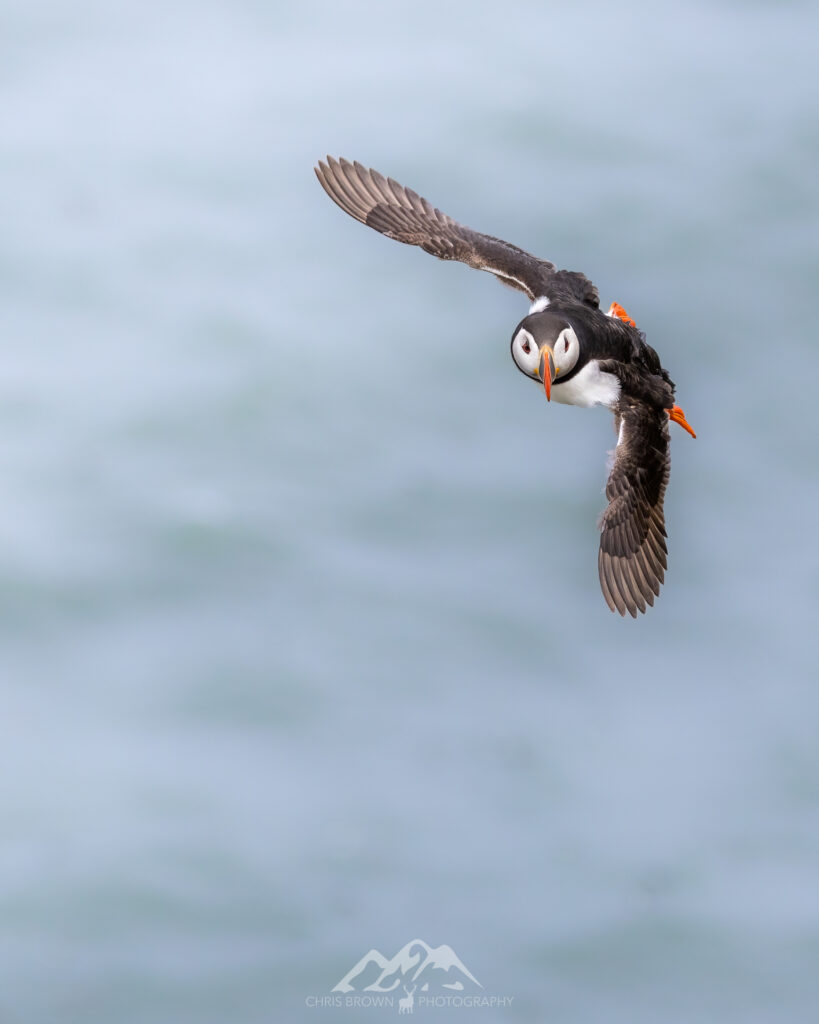
This is invaluable for action—whether it’s a grebe running across water or a puffin landing with a beak full of fish.
The buffer is decent, handling upto 51 RAW shots before slowing down. That’s enough for most real-world bursts, but if you’re holding the shutter down too long, you will hit limits pretty fast especially at 30 fps. It forces a bit of discipline in timing your shots—which isn’t necessarily a bad thing.
Build Quality and Weather Sealing
The R7 feels solid in hand, with a reassuring level of weather sealing. It’s handled drizzle, sea spray, and muddy woodland conditions without complaint.
While it’s not quite at flagship pro-body levels, it’s more than capable for serious outdoor use—especially when paired with L-series glass like the RF 100–500mm.
Autofocus Performance
Canon’s Dual Pixel CMOS AF II system is one of the standout features. It covers nearly the entire frame and tracks subjects impressively well .
In the field, this translates to:
- Reliable tracking of moving deer through foliage
- Strong lock-on for birds in flight
- Flexibility in composing off-centre subjects
The hit rate is high, especially in good conditions, and it’s a major step up from older DSLR systems.
Animal Eye AF
Animal Eye AF is where the R7 starts to feel almost unfair—in a good way.
It can detect and track birds and mammals, locking onto eyes when possible . For subjects like kingfishers or puffins, this can mean the difference between a sharp eye and a missed shot.
That said, it’s not perfect. Busy backgrounds, branches, or fast erratic movement can confuse it. But when it works—and it often does—it feels like having an assistant helping you nail focus.
Handling and Ergonomics
The R7 strikes a nice balance between compact and functional.
- Deep grip for long lenses
- Customisable controls
- Joystick + dial combo (which can take some getting used to)
With the RF 100–500mm attached, the setup feels well-balanced for handheld shooting, even over long sessions. It’s a camera you can comfortably carry all day—important when waiting hours for wildlife moments.
Limitations of the Canon R7
No camera is perfect, and the R7 has a few notable drawbacks:
- Low-light limitations compared to full-frame bodies
- Buffer clearing time can slow you down after long bursts
- Electronic shutter rolling shutter issues with fast movement
- Battery Grip not available for the R7
There are also occasional quirks with autofocus in cluttered scenes—something many wildlife photographers will recognise.
Final Thoughts
The Canon EOS R7 is, quite simply, a wildlife photography powerhouse—especially for enthusiasts and serious hobbyists.
Its strengths are clear:
- Exceptional reach thanks to the crop sensor
- Fast burst shooting for action
- Advanced autofocus and animal eye detection
- Solid build for outdoor work
When I’m photographing red deer at sunrise or tracking a kingfisher along a riverbank, the R7 consistently delivers. It’s not flawless, particularly in low light, but its strengths align perfectly with the demands of wildlife photography.
Paired with the RF 100–500mm, it becomes a highly capable, versatile system that rewards patience, timing, and fieldcraft—exactly what wildlife photography is all about.
A few tips…
Field Techniques for Better Shots
1. Patience is Everything – Wildlife rarely performs on cue. Spend time observing behavior patterns and wait for the right moment.
2. Get Low – Shooting from the animal’s eye level creates a more intimate and engaging perspective.
3. Use Natural Light – Early morning and late afternoon (the “golden hours”) offer soft, warm lighting and more active wildlife.
4. Stay Quiet and Blend In – Wear neutral colors and move slowly. The less you disturb your environment, the more natural your shots will be.
Composition Tips
- Rule of thirds: Place your subject off-centre for a more dynamic image
- Eye contact: Sharp eyes create emotional connection
- Background separation: Use wide apertures to blur distracting backgrounds
- Capture behavior: Feeding, hunting, or interaction tells a story